A lot of homeowners don’t think about bird proofing until they’re already dealing with the mess that comes after ignoring it.
By then there’s usually a nest tucked under the panels, droppings baked onto the glass, and sometimes wiring that’s been pecked at or contaminated. The frustrating part is that none of this happens overnight. It builds gradually, and most people don’t notice until output drops or something needs replacing.
If you’ve ever spotted pigeons sitting on your roof regularly, heard scratching from above on quiet mornings, or noticed dark streaks running down your panels, this is worth reading.
Why Birds Target Solar Panels in the First Place
Solar panels create a gap between the panel and the roof surface. That gap is warm, sheltered, and almost completely protected from predators. For birds, especially pigeons, it’s essentially an ideal nesting spot. It checks every box they’re looking for, shade, warmth, height, and cover.
Once a bird finds it, others follow quickly. Birds are creatures of habit and communicate nesting locations to the rest of their flock. What starts as one pair roosting can turn into a persistent colony within a season. The longer they’re there, the more embedded the problem becomes, and the harder it is to remove them without damaging the system.
In Southern California particularly, the dry climate and year-round mild temperatures mean there’s no cold season to naturally push birds away. Your setup stays attractive to them throughout the entire year, which is exactly why consistent attention to bird guard installation matters so much before the problem takes root.
The Hidden Damage Bird Activity Causes
Most people assume the worst that birds can do is leave droppings on the glass. The reality is more serious than that, and it reaches further than the panels themselves.
Nesting materials, which include dry twigs, grass, feathers, and debris, are highly flammable. When those materials pile up near wiring under your panels, the fire risk is real. It doesn’t require anything dramatic to trigger it, just heat from the system on a hot day combined with dry material sitting against exposed wiring is enough.
Beyond fire risk, bird droppings are highly acidic. Left on panel glass over time, they etch the surface coating and cause permanent damage that no amount of cleaning can fully reverse. They also create a hotspot effect where one fouled panel drags down the performance of the entire string connected to it.
The damage often spreads to the roof itself. Nesting activity traps moisture against the roofing material underneath, which accelerates deterioration. Droppings also eat into roofing materials over time. What looks like a minor bird nuisance from the ground can become a roofing repair situation when left untreated for long enough.
For a fuller picture of what this kind of ongoing damage costs homeowners who don’t address it, this piece on how save you money by acting early is worth reading before deciding to wait.
What Effective Bird Proofing Looks Like
Good bird proofing for solar panels closes off the gap beneath the panels without interfering with airflow or the system’s performance.
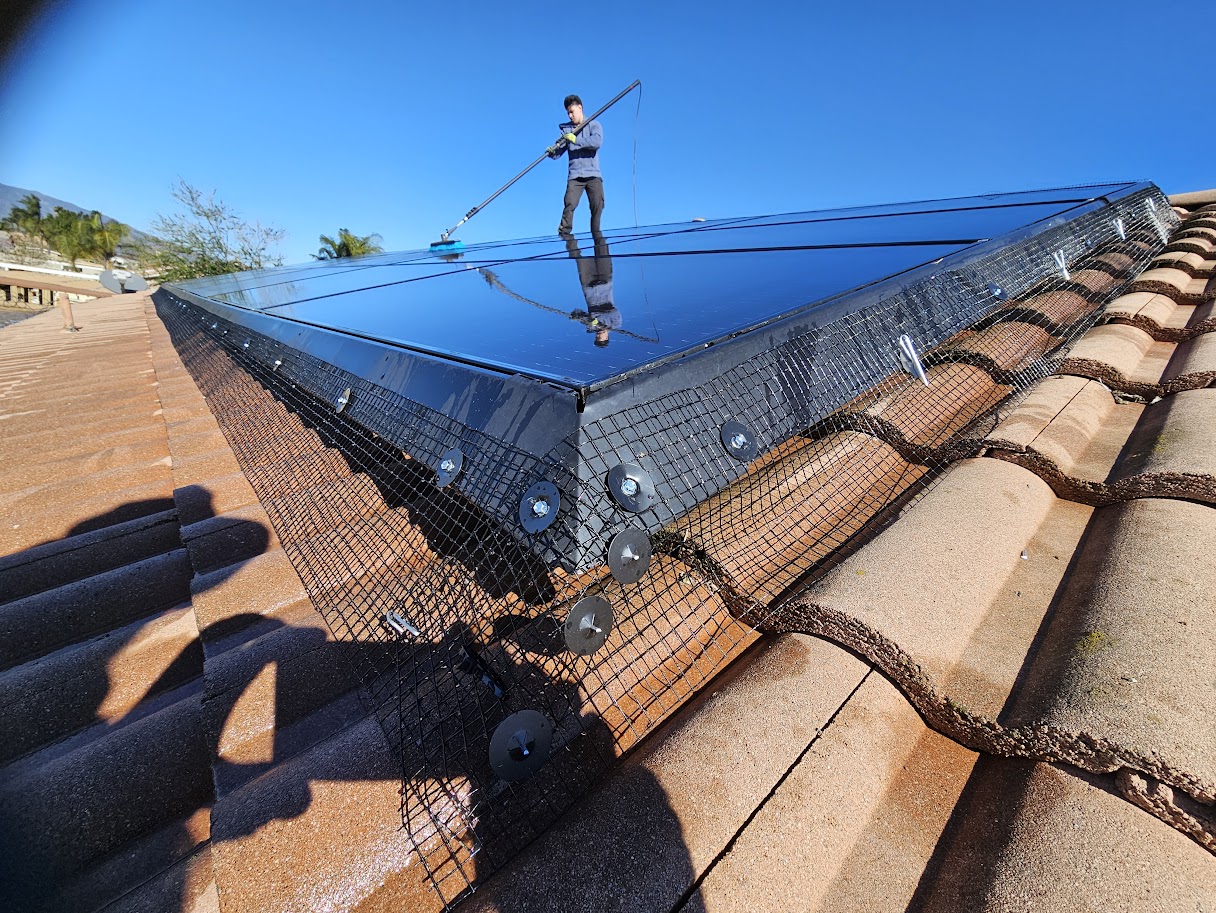
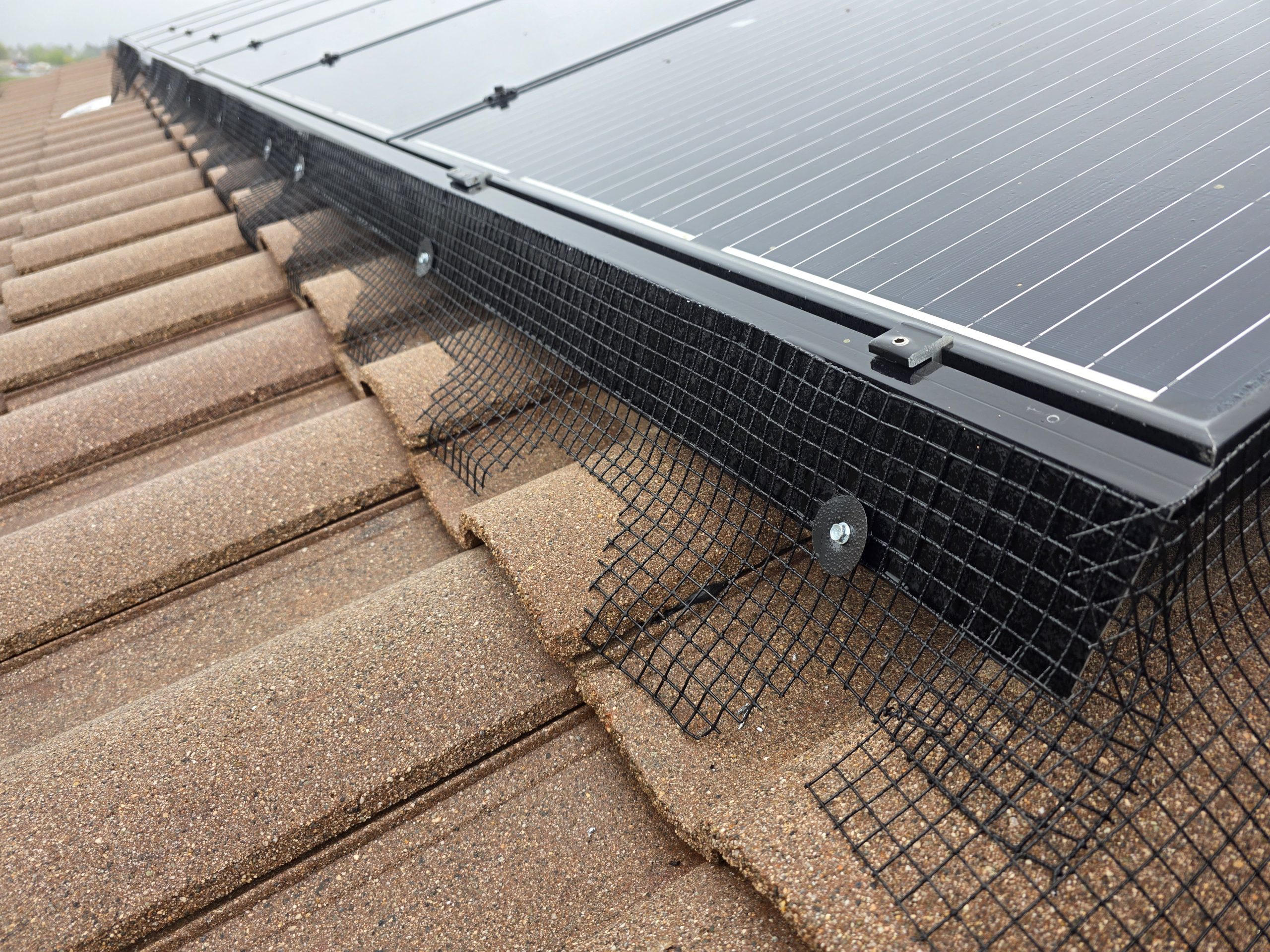
The most common and effective solution is a galvanized steel mesh that attaches around the perimeter of the panel array. It sits flush against the frame and the roof, leaving no gaps for birds to squeeze through while still allowing ventilation.
Mesh is preferred over spike-based deterrents for the underside gap specifically because spikes don’t seal the entry point. They make landing on the panel edges less comfortable, but they don’t stop birds from nesting underneath, which is where the real problem lives.
For a proper installation, the mesh needs to be sized correctly to your specific panel layout and secured in a way that won’t loosen over time from wind or heat expansion. A poor fit leaves gaps that birds find quickly.
Cutting corners on materials or fit tends to mean doing the job twice, which costs more than getting it right the first time. Understanding the full range of solutions available for residential solar systems can help you choose the approach that fits your setup best.
Why Professional Installation Is Worth It
Getting up on a roof to work around live electrical equipment is not a casual DIY task. Solar panels operate at voltage even on cloudy days. Installers who work on these systems know how to navigate the wiring layout safely, which components to avoid, and how to attach barriers without creating pressure points that could crack a panel or loosen a mount.
There’s also the issue of getting the fit right. Mesh that isn’t cut and attached correctly leaves entry gaps that defeat the purpose entirely. A professional measures the perimeter properly, uses the right gauge of material for your specific climate and bird species, and secures everything so it stays put through wind, heat cycles, and rain.
It’s also worth knowing what mistakes to avoid going in. There are several common errors that show up repeatedly when people try to handle this themselves or hire someone without the right experience. This overview of common mistakes during the process is practical reading before you commit to any approach.
Affordable Solar Cleaning Pros handles bird proofing installs alongside their cleaning and maintenance work, which means they can assess the full condition of your panels and roof edge at the same time rather than treating each issue in isolation.

Protecting Your Investment for the Long Run
A properly installed bird proofing system is a one-time job that holds up for years when done correctly. It removes the recurring cost of cleaning up nesting debris, dealing with damaged wiring, and patching roof areas where moisture has worked its way in. That’s a meaningful return on a straightforward upfront cost.
The financial argument for bird proofing isn’t complicated. Every month you delay is another month of potential accumulation. Nests don’t stay small. Droppings don’t stop at one panel. The longer birds have access, the more they settle in, and the more it costs to remove them, clean up after them, and repair anything they’ve damaged in the process.
Bird proofing is also much easier to install on a clean, undamaged system. Once wiring has been compromised or roofing has been degraded beneath the panels, you’re dealing with repair work on top of the protection work. Getting there ahead of the damage is always the simpler path.
The connection between a protected, well-maintained system and long-term energy output is real. Keeping birds out is one of the most direct ways to make sure that protection holds over time. Investing in proper bird proofing early is one of the smartest decisions a solar panel owner can make.
Frequently Asked Questions (FAQs)
1. How Do I Know If Birds Are Already Nesting Under My Panels?
The clearest signs are regular bird activity on or around your roof, scratching or cooing sounds from above, visible droppings running down the panels or fascia, and nesting material visible at the edges of the array. A noticeable drop in energy output on otherwise clear days can also indicate contamination from droppings affecting panel performance.
2. Is Bird Proofing Safe for My Solar Panels?
Yes, when installed correctly. Professional bird proofing uses materials and attachment methods that don’t put pressure on the panel frame or interfere with the wiring underneath. The mesh sits around the perimeter, not on the panels themselves, so it poses no risk to the glass surface or the electrical components.
3. Can I Remove Birds That Are Already Nesting Before Installing Protection?
Birds and their active nests are protected under federal law in the United States, so removal needs to be handled carefully and at the right time.
A professional can advise on the appropriate approach based on what species are present and whether nesting is currently active. Once the area is clear, bird proofing should go in immediately to prevent them from returning.
4. How Long Does a Bird Proofing Installation Take?
For most residential solar setups, the installation is completed in a single visit. The timeline depends on the size of the array and whether any prep work is needed first, such as clearing existing debris or nesting material from underneath the panels before the mesh goes on.
5. Does Bird Proofing Affect Airflow Under My Panels?
No. The mesh used for solar panel bird proofing is designed to block entry while still allowing air to circulate freely beneath the panels. Proper ventilation under the array is actually important for panel performance and longevity, and a well-fitted barrier preserves that airflow while closing off access to birds.