If you’re a solar panel owner and you’re not quite sure what solar panel cleaning and maintenance should actually look like on a regular basis, that’s more common than you’d think. Most people research panels before they buy them, focusing on how to fit solar panels and get the system running, but don’t get a clear picture of what ongoing care involves.
Then they’re left wondering whether what they’re doing is enough, or whether their system is quietly underperforming and they’d have no way of knowing.
This guide is the practical answer to that question. It covers what a complete approach to solar panel cleaning and maintenance looks like, why both sides of it matter, and how to structure your routine so your system holds its performance over time.
Why Solar Panel Cleaning and Maintenance Both Matter
Cleaning and maintenance are related but different. Cleaning addresses what accumulates on the surface of your panels. Maintenance is about the condition of the whole system, including the framing, wiring, mounting hardware, and connections underneath.
Both affect energy output, just in different ways. A dirty panel surface blocks sunlight, which reduces how many watts your system generates. A panel with a cracked cell, a loose junction, or corroded framing may look clean from the ground but still underperform because something structural or electrical has deteriorated.
The reason solar panel cleaning and maintenance are best treated together is that the most natural opportunity to catch system-level issues is during a cleaning visit, when a technician is physically close to every panel and can see things invisible from street level.
Treating cleaning as purely cosmetic and ignoring maintenance until something breaks is how small, fixable problems become expensive ones.
What Regular Solar Panel Cleaning Involves
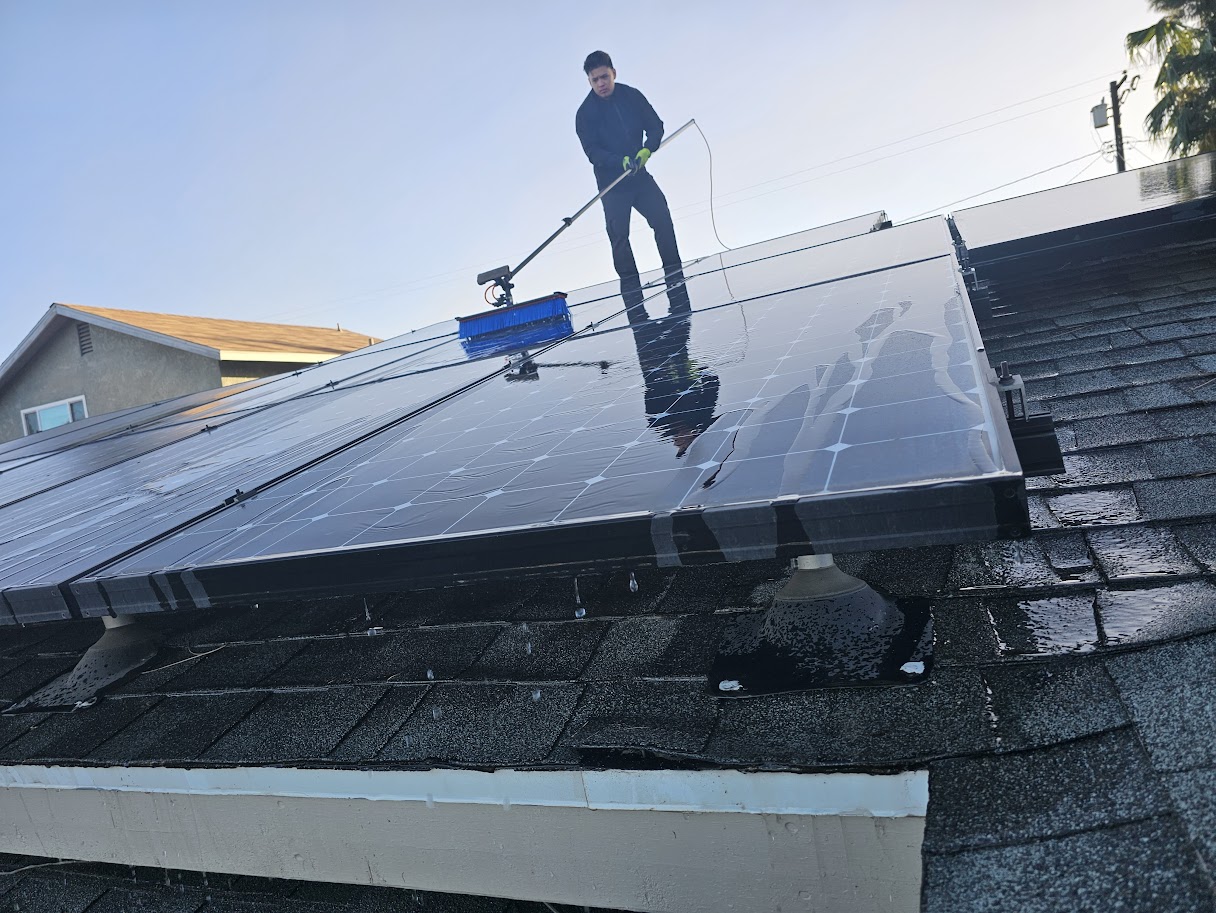
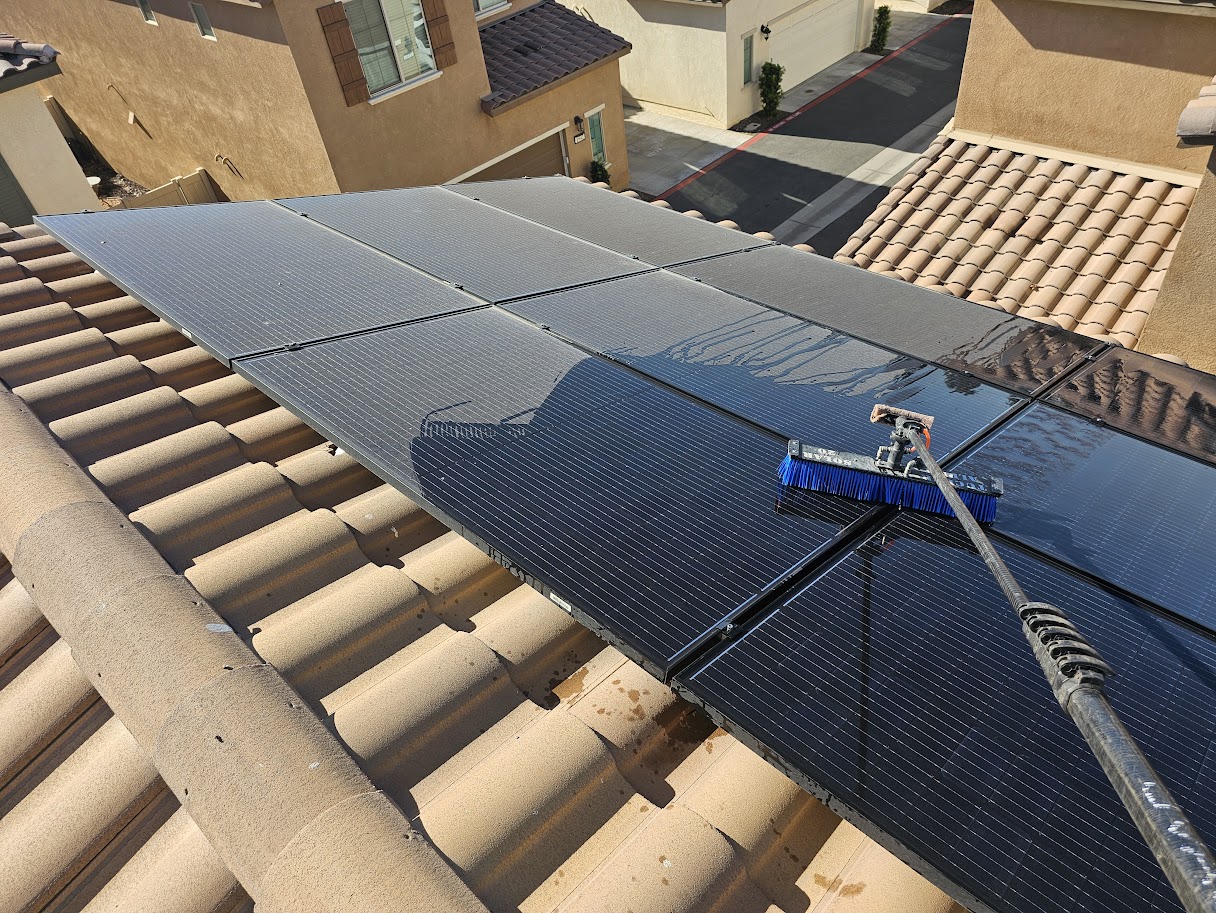
Surface cleaning done correctly is a specific process. It starts with purified or deionized water, which evaporates without leaving mineral residue on the glass.
Tap water deposits a thin film of minerals each time it dries on the panel surface, and those deposits accumulate into their own layer of contamination across multiple cleans. Professional solar panel cleaning and maintenance services use the right water quality as a baseline.
The tools matter too. Soft brush systems designed for photovoltaic glass are the standard. Abrasive materials or pressure washing can scratch the anti-reflective coating permanently, reducing how well your panels absorb light for the rest of their operational life.
Once that coating is damaged, no amount of future solar panel cleaning and maintenance can restore it.
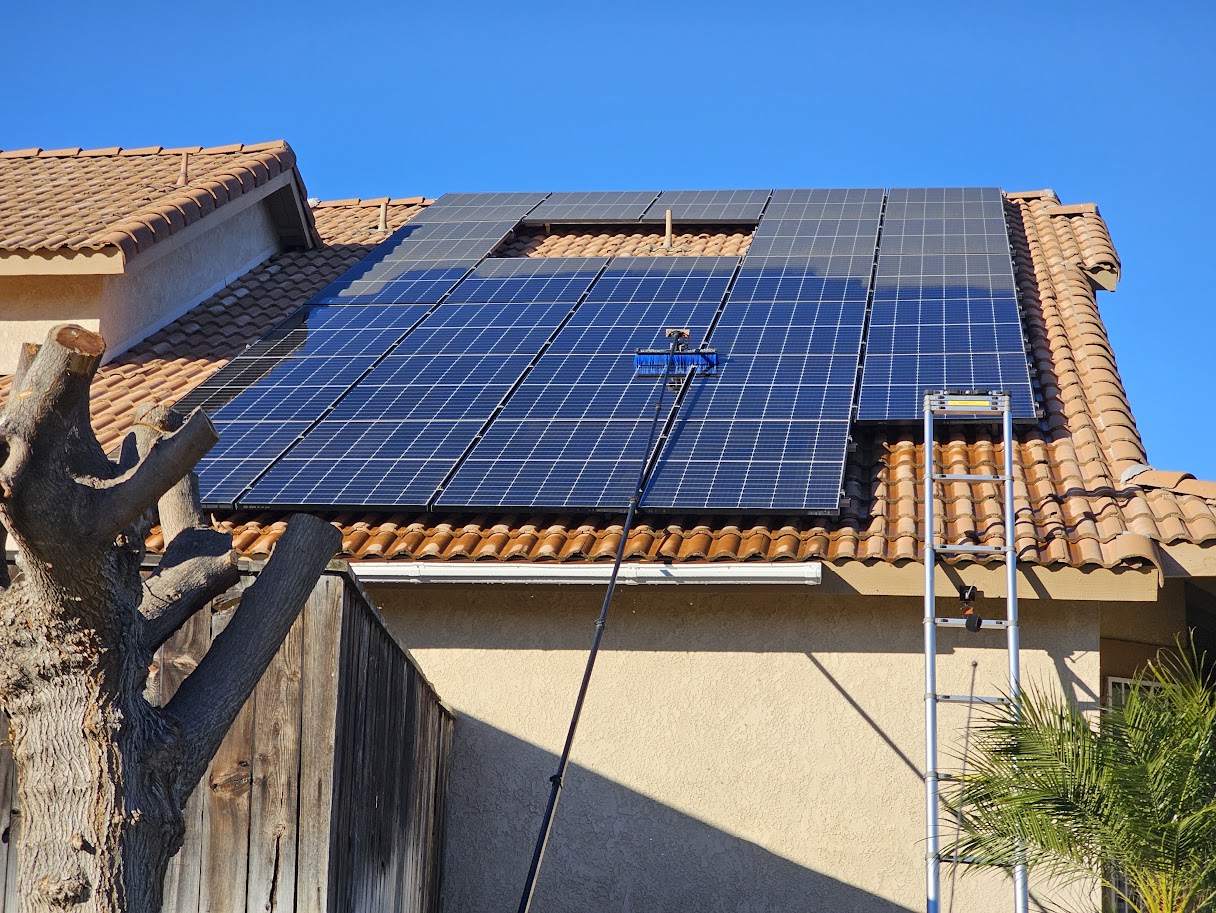
A proper clean covers the full surface of every panel systematically, rinses thoroughly, and leaves no residue or streaking. It should also include a visual scan for surface issues like bird dropping etching, delamination, discoloration from heat, or cracked glass.
These are things that a trained eye catches during cleaning that a homeowner doing a quick rinse from the ground simply won’t notice.
One thing worth understanding is how physical properties like electrostatic forces affect how dust clings to solar panel glass, and why some contamination doesn’t shift even when it rains. That context helps explain why periodic professional cleaning is necessary even in climates that see regular rainfall.
Maintenance Checks That Go Beyond the Surface
The maintenance side of solar panel cleaning and maintenance means looking at the system’s physical and electrical components on a scheduled basis. Not all of this requires a specialist, but some of it does.
The panel frames and mounting hardware should be checked for signs of corrosion, looseness, or stress from wind and temperature cycling. Frames that have worked loose shift panel alignment and can create pressure points that crack cells over time.
Catches like this are easy and cheap to address early. Left unattended, they escalate into structural problems or panel replacements.
Wiring and junction boxes underneath the panels need to be checked for wear, critter damage, or moisture intrusion. This is the part of maintenance that homeowners genuinely should not attempt themselves.
Working around live electrical components on a rooftop requires training and proper safety equipment. A professional doing solar panel cleaning and maintenance can inspect this area safely and flag anything that needs an electrician’s attention before it becomes a fault.
Inverter performance is another element of a complete maintenance picture. Your inverter converts the DC power your panels generate into usable AC electricity for your home. Most modern inverters have monitoring built in, but a technician can verify that the inverter is producing output consistent with what the panels should be generating.
Gaps between expected and actual output often trace back to issues that a surface clean alone won’t reveal. This is also where understanding the potential for more complex issues connects to knowing when solar panel repair 101 principles apply and a service call is warranted.
How Often to Schedule Professional Service
For most residential properties in California, a solar panel cleaning and maintenance schedule of two to four professional visits per year covers the basics. The right frequency depends on where you live, how your panels are mounted, and what environmental conditions affect your roof.
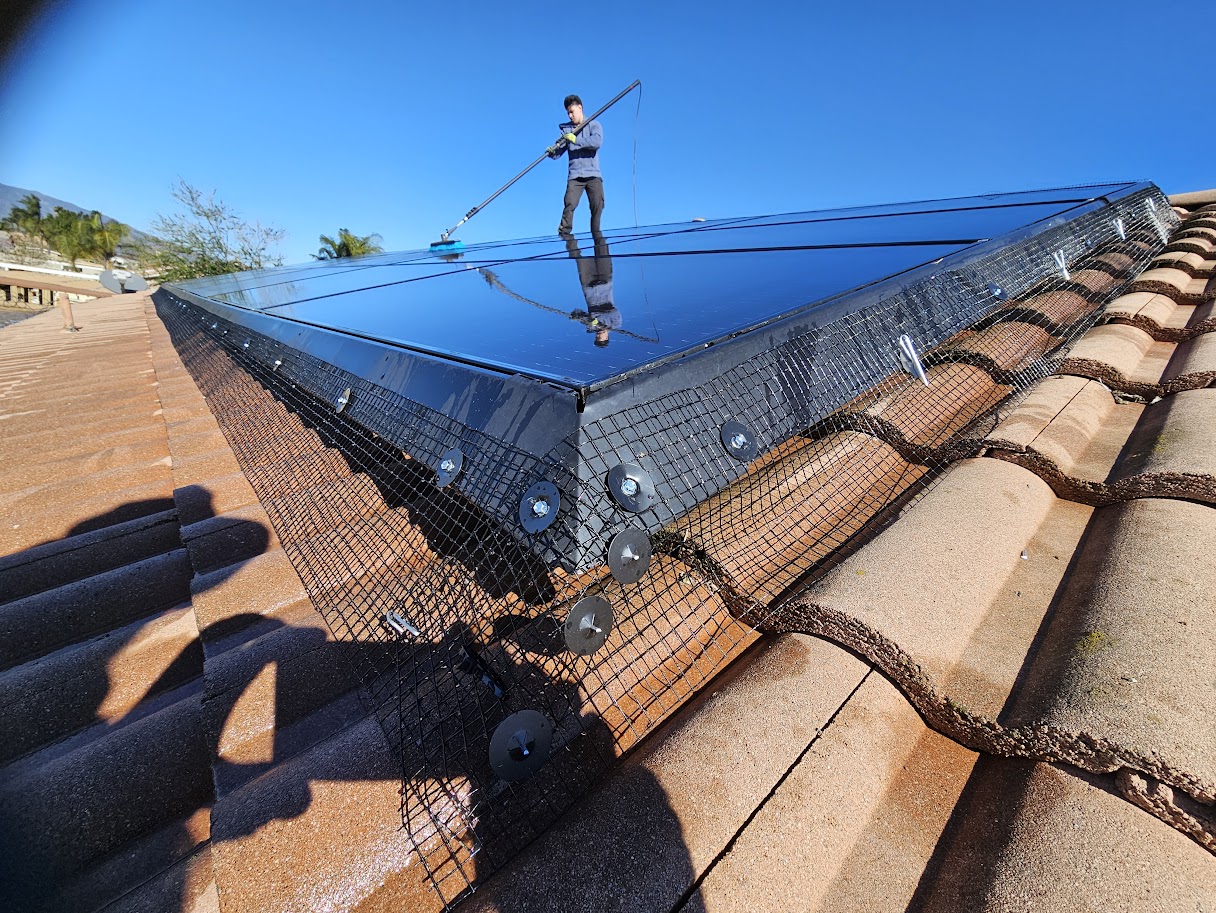
Properties near dusty roads, farmland, or industrial areas accumulate contamination faster. Homes with heavy bird activity around the roof have additional fouling from droppings and nesting debris. Both situations call for more frequent service than a property in a low-exposure suburban area.
Flat-mounted or low-tilt panels, common on commercial buildings but also found on some residential designs, don’t benefit from rain runoff the same way steeply angled panels do. They hold standing dust, pollen, and debris longer between visits and typically need more frequent cleaning to maintain the same performance level.
Your monitoring data is the most practical indicator of when solar panel cleaning and maintenance is due. A drop in production on a clear day that doesn’t correlate with seasonal changes almost always signals surface contamination or a developing system issue. Watching for that pattern and acting on it quickly limits the period of underperformance between visits.
Common Signs Your System Needs Attention
Beyond monitoring data, there are physical signals worth knowing. Visible streaking, discoloration, or a dull appearance on the panel glass from the ground suggests contamination that has built up long enough to see clearly. Dark or wet-looking patches near junction boxes or along the frame edges can indicate moisture ingress that needs prompt attention.
Unusual sounds, such as humming or buzzing from the inverter that wasn’t present before, are worth investigating. So is a situation where one section of your array consistently underperforms while others don’t.
Partial shading and soiling patterns can cause this, but so can a failing cell string or a connection issue that solar panel cleaning and maintenance visits would normally catch before it worsens.
Maintaining your system is as much about clean energy production as it is about protecting a financial asset. Understanding the broader environmental benefits of a well-maintained solar system puts the value of consistent solar panel cleaning and maintenance into a fuller perspective.
Affordable Solar Cleaning Pros provides complete solar panel cleaning and maintenance services across Southern California, covering surface cleaning, visual inspections, and system condition reporting in a single visit.
Frequently Asked Questions (FAQs)
1. Can I Handle Solar Panel Cleaning and Maintenance Myself?
Light surface dusting with a soft cloth is something homeowners can manage, but anything beyond that carries real risk. The wrong tools, water, or technique can permanently scratch the panel coating.
Electrical and structural inspection requires training and safety equipment that most homeowners don’t have. A complete approach to solar panel cleaning and maintenance is best handled by professionals who know what to look for and how to do the work safely.
2. What Happens if I Skip Solar Panel Cleaning and Maintenance for a Long Time?
Output losses from dirty panels compound quietly over months. Contamination that hardens on the surface becomes harder to remove safely. Structural and electrical issues that go unspotted escalate from minor fixes into major repairs.
The longer solar panel cleaning and maintenance is deferred, the more ground you have to make up in both performance and system condition.
3. How Do I Know if My Solar Panel Cleaning and Maintenance Schedule Is Working?
The clearest indicator is your monitoring data. If your system’s output on clear, sunny days tracks consistently close to its expected performance and you’re not seeing unexplained dips, your maintenance schedule is likely doing its job.
A gradual decline that doesn’t correlate with seasonal changes, on the other hand, usually signals that cleaning or a system check is overdue.
4. Does Solar Panel Cleaning and Maintenance Affect My Warranty?
Most panel manufacturers include maintenance requirements in their warranty terms. Neglecting service to the point where damage results from lack of care can complicate a warranty claim.
Keeping a record of your solar panel cleaning and maintenance visits, including what was done and any findings noted, provides documentation that demonstrates reasonable upkeep if you ever need to make a claim.
5. Is There a Difference Between Solar Panel Cleaning and Full System Maintenance?
Yes, and both matter. Cleaning addresses surface contamination. Full system maintenance covers the structural, electrical, and performance dimensions of your installation.
A proper solar panel cleaning and maintenance service combines both in the same visit, so that your panels are clean and your system’s overall condition is assessed at the same time. Getting only one without the other leaves gaps in what you know about how your system is actually performing.