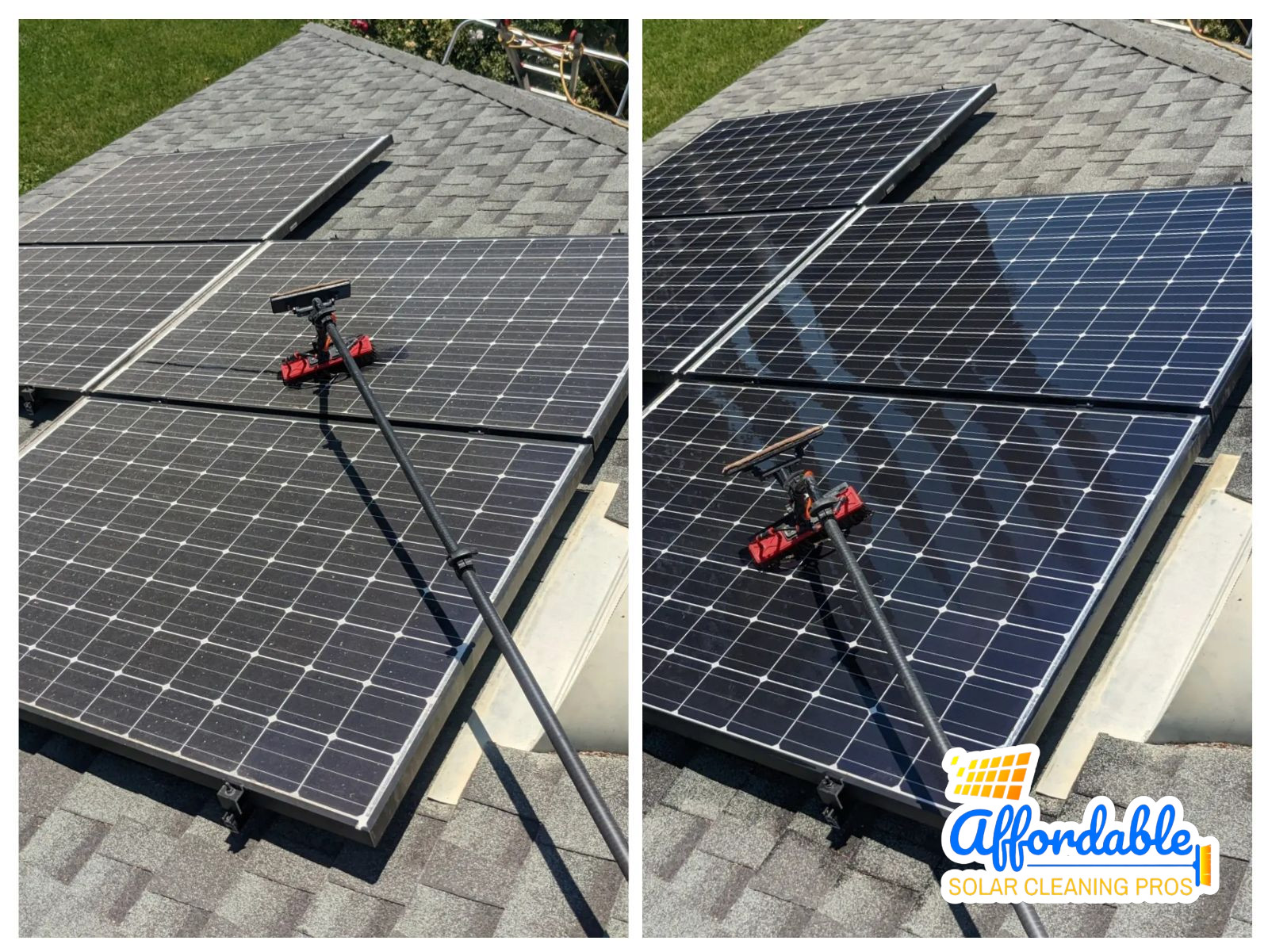
If you’ve ever questioned whether solar panel cleaning is actually worth the effort, you’re not alone in that. Many homeowners assume their system is performing fine as long as it’s still generating electricity.
What they don’t realize is that dirty panels can silently bleed energy and money at the same time, and nothing on your inverter readout will warn you until the loss has already compounded.
This article breaks down exactly what happens when you skip maintenance, why the consequences build up faster than you’d expect, and what a smarter approach to upkeep actually looks like.
What Dirty Panels Actually Do to Your Energy Output
Dust, pollen, bird droppings, and airborne particulates don’t just make your panels look dingy. They block sunlight from reaching the photovoltaic cells, which directly reduces how much electricity your system can convert.
Even a moderate layer of grime across the glass surface can cut your output by a noticeable margin. This is the core problem that consistent solar panel cleaning is designed to solve before losses stack up.
In dry climates like Southern California, this effect compounds quickly. Particles settle fast between rain events and don’t clear on their own.
What starts as a small efficiency dip becomes a sustained drag on your system’s performance over weeks and months. By the time most homeowners notice something is off, the cumulative loss in energy production is already significant.
Understanding how environmental factors affect panel performance in your specific region gives you a much clearer picture of what you’re actually dealing with on a day-to-day basis.
The Buildup You Can’t Always See from the Ground
Not all contamination is obvious at a glance. Bird droppings harden into a crust that resists plain water. Tree sap leaves a sticky film that traps more particles on top of it. Fine dust from nearby roads, construction sites, or agricultural fields coats the glass in a layer that’s nearly invisible until you’re standing right next to the panel.
Here’s the part that catches a lot of people off guard, your panels will still produce electricity even when they’re fairly dirty.
The output drops incrementally, so without a consistent baseline to compare against, the loss can fly under the radar for months. By the time a drop in your monitoring data becomes undeniable, the buildup has likely been affecting performance for a while.
This is one of the strongest arguments for treating solar panel cleaning as a routine appointment rather than a reactive fix. Professionals who handle it regularly can also identify issues with your panels that have nothing to do with surface dirt, catching problems before they develop into something more expensive.
How Often You Should Schedule for Solar Panel Cleaning
There’s no single right answer, but for most residential systems in California, two to four cleanings per year is a reasonable baseline. If you live near high-traffic roads, farmland, or anywhere with frequent bird activity, you’ll likely want to schedule more often.
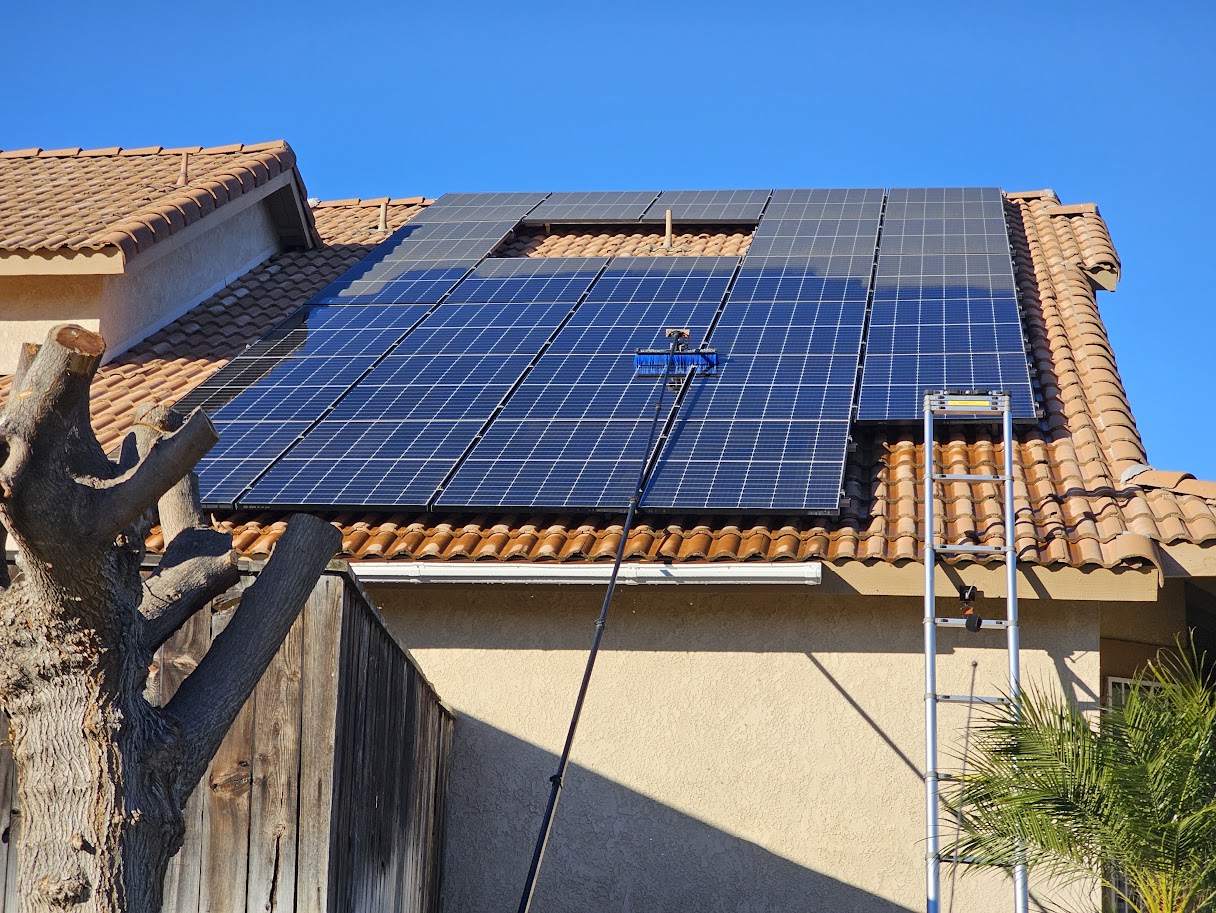
Panel angle plays a role here too. Panels mounted at a steeper tilt shed rain and debris more efficiently. Panels closer to flat tend to accumulate more and need more frequent attention to stay at peak output.
The most practical signal to watch for is your monitoring data. A dip in production on a clear, sunny day that doesn’t line up with seasonal patterns almost always points to surface contamination. When that happens, it’s time to act. Waiting longer just extends the period of underperformance.
For a closer look at how to approach timing and the factors that influence it, this resource on getting panels professionally cleaned to maintain efficiency covers the variables in more practical detail.
Why Professional Cleaning Beats DIY Every Time
The temptation to grab a garden hose and handle it yourself is understandable, but the risks are real. Using the wrong brush, an abrasive cloth, or too much water pressure can scratch the anti-reflective coating on your panels. That kind of surface damage is permanent. There’s no fixing it, and your efficiency takes a lasting hit.
Pressure washers are particularly risky. They can crack cells or force water into the junction boxes beneath the panel frame. Even well-intentioned DIY solar panel cleaning efforts have ended with damage that cost more to repair than any professional service would have.
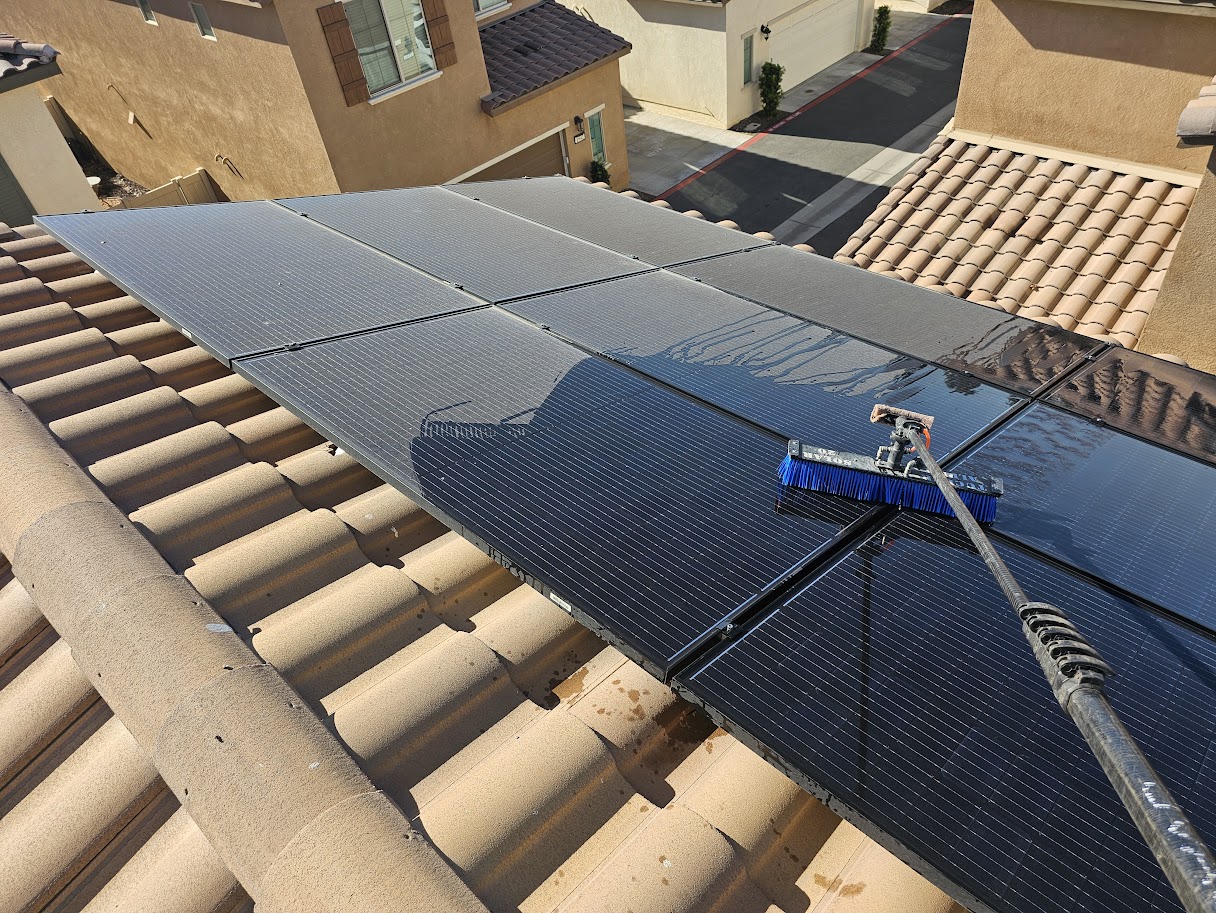
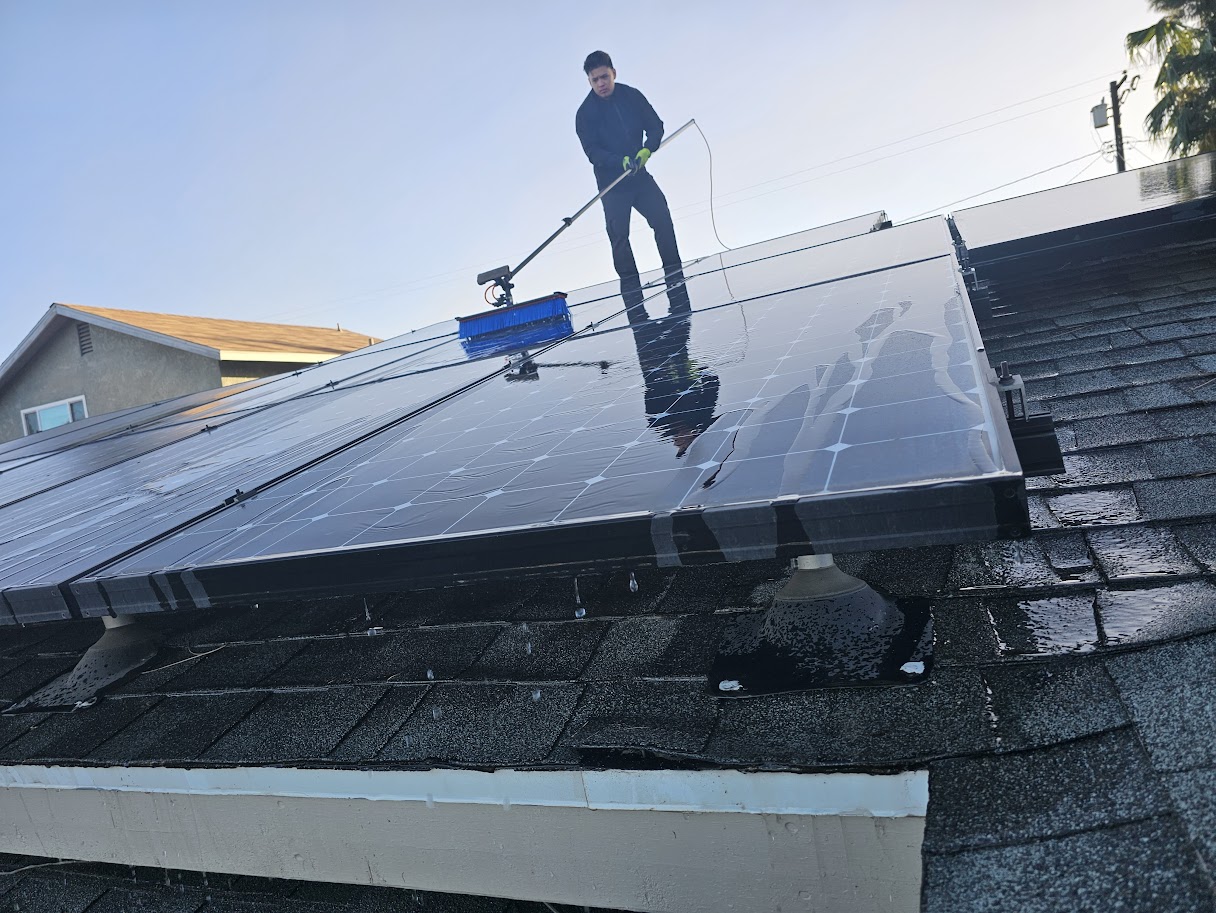
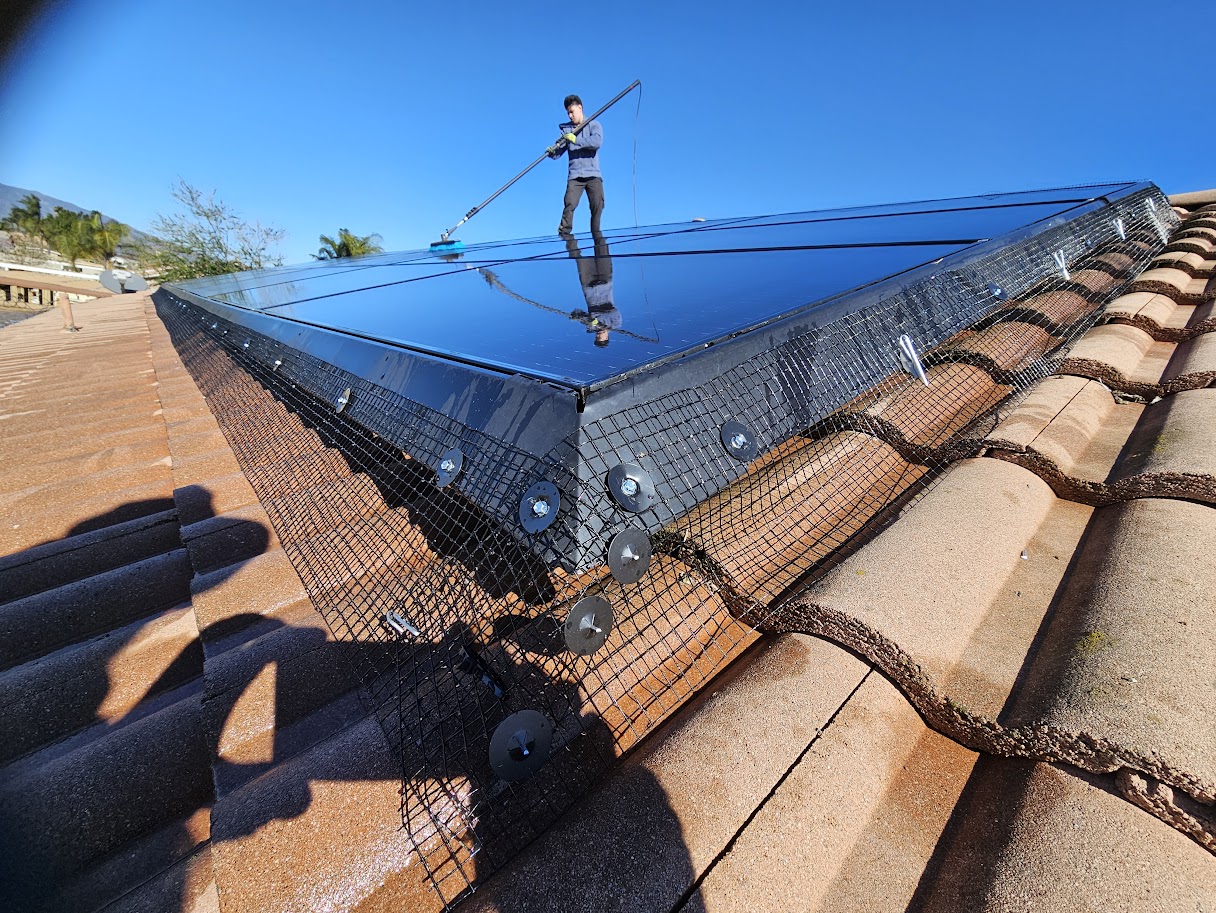
Professionals use purified or deionized water, which evaporates cleanly without leaving the mineral residue that tap water deposits on glass. Their brushes and squeegees are designed specifically for photovoltaic surfaces, so the process is both thorough and safe.
Beyond the mechanics, professional solar panel cleaning also prevents power loss from becoming a slow, invisible drain on your overall system performance.

The Long-Term Solar Performance Case
Panels are built to last for decades, but that assumes they’re being properly maintained along the way. Consistent upkeep directly affects how long your system sustains strong output and, in some cases, whether your warranty remains valid. Some manufacturers note that negligence in maintenance can factor into how a warranty claim is assessed.
Beyond the warranty angle, there’s a straightforward financial argument. If your system is running at 85 percent of its potential because of accumulated grime, you’re paying for solar capacity you’re not actually using. Over several years, that underperformance adds up to a real financial loss, not just a theoretical one on paper.
Scheduling regular solar panel cleaning is one of the simplest and most cost-effective steps you can take to protect what you’ve put into your system.
The team at Affordable Solar Cleaning Pros approaches every job with the goal of getting your panels back to full output and keeping them there. For a broader look at what consistent professional maintenance does over time, this piece on the long-term benefits of regular professional cleaning is worth reading through.
Frequently Asked Questions (FAQs)
1. Can I Clean My Solar Panels Myself?
You can, but it carries more risk than most homeowners expect. Abrasive materials, harsh cleaners, or pressure washing can scratch the panel surface and permanently reduce light absorption.
If you do go the DIY route, stick to soft microfiber cloths and plain water or a mild, non-abrasive soap. For anything more than a light dusting, having a professional handle your solar panel cleaning is the safer and more reliable choice.
2. How Much Energy Can I Actually Lose from Dirty Panels?
In moderately dusty environments, soiling losses typically fall between 5 and 20 percent. In drier, higher-dust regions or areas with heavy bird activity, the figure can climb higher.
The exact loss depends on the type and thickness of the buildup, how long it has been sitting, and the angle of your panels. Consistent solar panel cleaning is the most direct way to recover that lost output.
3. Does Rain Count as Solar Panel Cleaning?
Rain removes loose debris and can help reduce surface dust, but it is not a substitute for proper solar panel cleaning. Rainwater carries its own mineral content and contaminants that dry on the glass and leave residue behind.
It does not break down hardened bird droppings, pollen paste, or oily film. Relying on rain alone leads to a slow, gradual efficiency decline that is easy to miss until it becomes significant.
4. How Do I Know When My Panels Actually Need Cleaning?
The most reliable indicator is your energy output data. If your monitoring system shows lower-than-expected production on bright, sunny days, surface contamination is usually a strong candidate.
You can also do a visual check from a safe vantage point on the ground. Dull, streaked, or visibly coated panels are a clear sign that it is time to schedule a cleaning appointment.
5. Is Professional Solar Panel Cleaning Worth the Cost?
In almost every situation, yes. The cost of a professional clean is modest compared to the energy losses that dirty panels generate over time. When you add in the risk of accidental damage from DIY attempts and the potential complications around warranty coverage, the case for professional solar panel cleaning becomes both financially and practically clear.