You’ve probably never thought of solar panel bird proofing as a financial decision, but that’s exactly what it is. Solar systems represent a significant upfront commitment, and most homeowners assume the panels themselves are the main thing to protect.
What gets overlooked is everything underneath and around them. That gap between your panels and your roof is where bird-related damage starts quietly, and where it tends to get expensive before anyone realizes something has gone wrong.
This article breaks down the real cost exposure of skipping protection and why solar panel bird proofing is one of the smarter decisions you can make as a solar owner.
The True Financial Cost of Bird Damage
When birds settle under your panels, the damage they cause falls into several categories, and each one carries a real price tag.
The most immediate is energy loss. Droppings on the panel surface block sunlight from reaching the cells and reduce output. One fouled panel in a string can drag down the performance of every other panel connected to it.
That lost output compounds over months into a real financial gap between what your system should produce and what it actually delivers.
Then there’s physical damage to the system itself. Nesting materials trap moisture against wiring and mounting components. Droppings are highly acidic and corrode the surfaces they sit on, including the underside of panel frames and the roof below.
Wiring that has been exposed to nesting debris doesn’t just underperform. It fails, and electrical repairs on rooftop solar systems are expensive.
Beyond the panels, there’s the roof to consider. Prolonged moisture under a panel array softens roofing materials. What starts as a bird activity problem becomes a roofing bill that has nothing to do with the panels themselves. This is exactly why investing in solar panel bird proofing early makes far more financial sense than waiting for visible damage to appear.
Why Your System Is Particularly Vulnerable
The gap between your panels and the roof is what makes your setup attractive to birds. It’s sheltered, warm, and elevated. That same gap is also where your wiring runs, where your mounting hardware sits, and where moisture is most damaging when it gets trapped.
Once a bird colony establishes itself there, they return consistently. Without a physical barrier, no temporary deterrent holds long-term because the gap always remains open. Understanding how to make your solar panel setup resistant to that access is the foundation of any effective plan. It’s a structural issue and it requires a structural solution, not just a surface deterrent.
What Solar Panel Bird Proofing Actually Prevents
The case for solar panel bird proofing becomes much clearer when you look at what a good installation specifically stops from happening.
It prevents nesting material from accumulating near wiring. Dry organic debris sitting against electrical components under a heated panel is a fire risk. Sealing access eliminates that risk entirely.
It prevents the recurring cleaning costs that come with heavy bird activity. Properties with active bird populations need more frequent cleaning to manage droppings, which means higher ongoing maintenance costs. Solar panel bird proofing significantly reduces that cycle by removing the source of the problem rather than just treating the symptoms.
It protects your roof. When birds can no longer access the gap, moisture stops being trapped beneath the panels, and constant surface contamination from droppings stops reaching the roofing material below. That matters over a multi-decade ownership period.
It also protects your warranty position. Many manufacturers expect owners to take reasonable maintenance steps. A panel with wiring damage, corrosion, or surface degradation from prolonged bird activity can complicate a warranty claim in ways that are hard to argue around.
Proactive solar panel bird proofing puts you in a much stronger position if something does go wrong. For a broader look at how different approaches compare for California homeowners, this breakdown of sustainable bird protection for solar panels is worth reading through.
How Protection Fits Into Long-Term System Care
Solar panel bird proofing isn’t a standalone fix. It’s one part of maintaining a system that performs as designed for its full operational life.
Birds accelerate degradation in two ways, they introduce contaminants that damage surfaces and components, and they reduce output over time, shortening the effective payback period of your investment. Every month an active colony goes unaddressed is another month of compounding wear on a system built to hold its performance over decades.
A system with clean frames, intact wiring, and no moisture intrusion underneath holds its output better long-term. This connection between consistent care and longevity is covered well in this discussion of solar panel lifespan and what professional maintenance actually contributes to it.
Proper solar panel bird proofing also reduces how often and how intensively cleaning is needed. When birds aren’t nesting below the array and aren’t congregating regularly, the rate of surface contamination drops. That’s a practical benefit that shows up in lower ongoing maintenance costs over time.

What a Professional Installation Covers
A proper solar panel bird proofing installation starts with an assessment of your specific array layout, the existing condition of frames and mounting hardware, and any signs of current or previous nesting.
If there’s existing debris or nest material under the panels, that needs clearing before any barrier goes in. Sealing organic material against your wiring creates more problems than it solves.
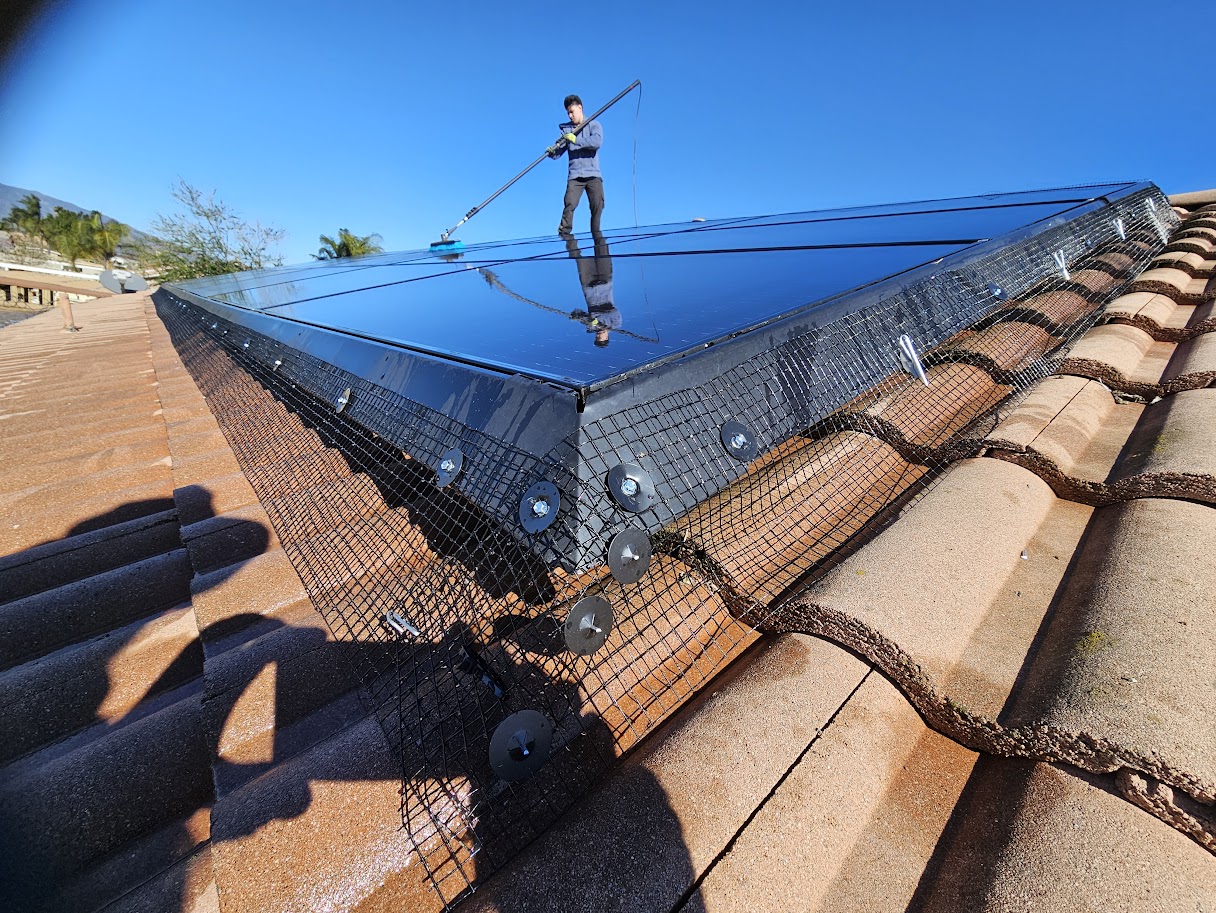
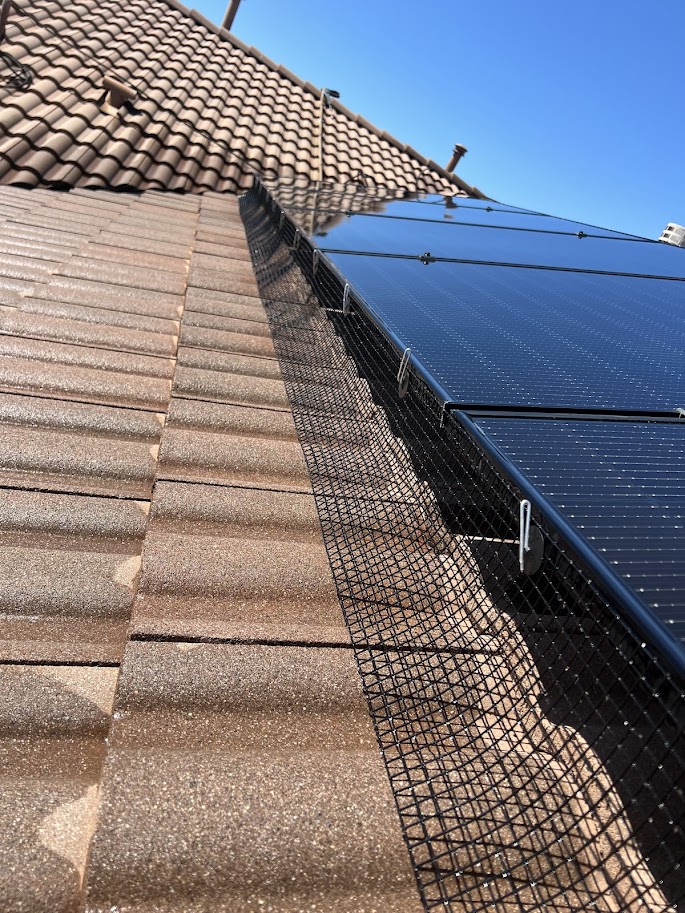
The barrier itself, typically galvanized steel mesh, is cut to fit the exact perimeter of your array and secured to the panel frames and roof surface with no entry gaps. The fit has to be precise. One loose edge is all a persistent bird needs to find its way back in.
Good installation also accounts for ventilation. Airflow beneath panels matters for temperature regulation and overall efficiency. A properly fitted barrier maintains that airflow while closing off access entirely.
The team at Affordable Solar Cleaning Pros handles the full process from inspection through installation and can flag other issues with your system while they’re up there. This overview of solar panel protection in California is a helpful reference for knowing what to ask and what to expect before you schedule.
Frequently Asked Questions (FAQs)
1. When Is the Best Time to Get Solar Panel Bird Proofing Done?
The ideal time is before birds establish a nesting presence, ideally soon after your panels are installed. If you’ve already noticed regular bird activity around your roof or signs of nesting, that’s a clear signal to act.
The longer a colony stays in place, the more remediation work is needed before the barrier can go in, and the more damage has likely already accumulated underneath.
2. Does Solar Panel Bird Proofing Void My Panel Warranty?
A professionally installed barrier that attaches to the panel frame without drilling into the panels themselves should not void your warranty. It’s worth confirming with your panel manufacturer directly, but installers who specialize in solar panel bird proofing are typically familiar with which attachment methods are warranty-safe and will use those by default.
3. How Is This Different from General Bird Deterrents?
Surface deterrents like spikes or reflective tape make landing less comfortable but don’t seal off the gap underneath your panels. Solar panel bird proofing specifically addresses that nesting space with a physical barrier.
For the underside of a rooftop array, a sealed barrier is consistently more effective than surface deterrents alone, especially for persistent species like pigeons.
4. How Long Does the Mesh Barrier Last?
A quality galvanized steel mesh installation holds up for many years without replacement. It should be checked during regular cleaning visits to confirm it’s fully seated and secure. If a section has come loose, reattach it promptly to maintain a complete seal and prevent birds from finding the gap again.
5. Will Birds Still Land on Top of My Panels After Installation?
Yes, the barrier closes off the gap underneath, not the surface on top. However, without a sheltered nesting spot below, the motivation for birds to stay around the area decreases considerably, and the volume of surface droppings typically drops as a result.
Combining solar panel bird proofing with regular cleaning gives you the most complete level of protection for both output and long-term system condition.